Everything You Need to Know About Chefchaouen, Morocco's Blue City

Crafted by Headout, a global experiences brand offering curated tours, tickets & experiences. Discover with ease, book with peace.
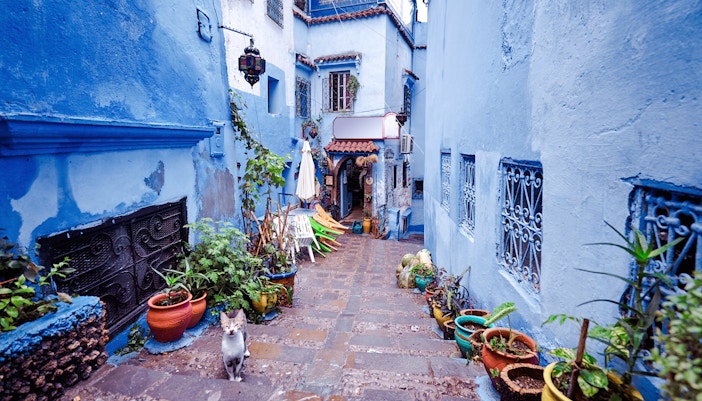
Street in Chefchaouen medina with blue walls, potted plants, and a cat, Morocco.

What is Chefchaouen?

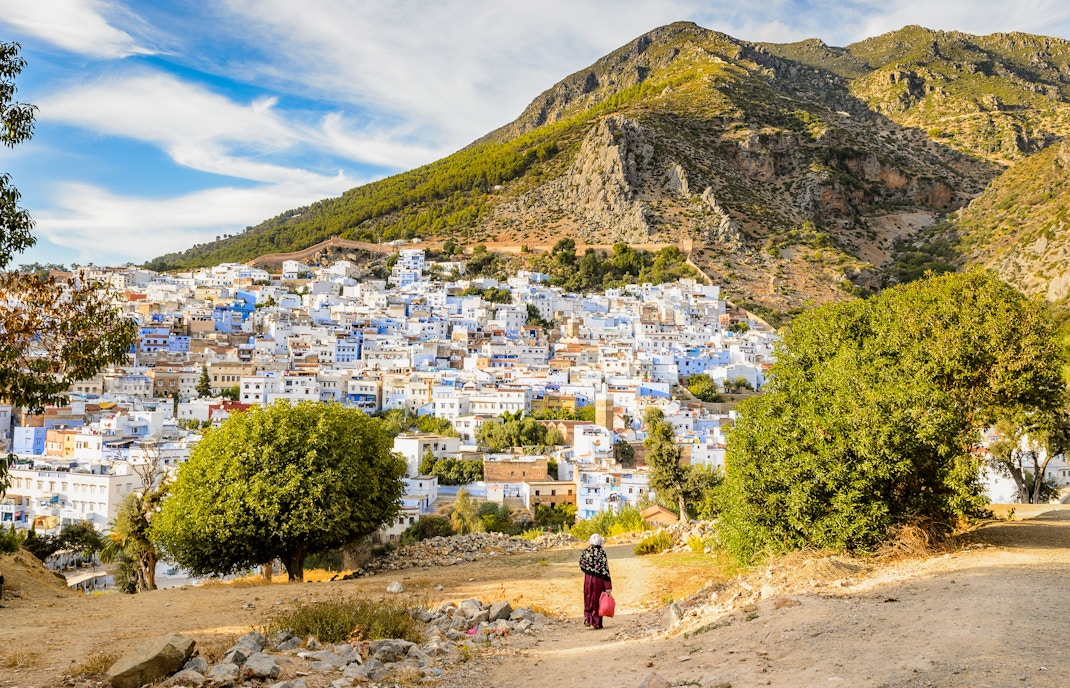
Chefchaouen is a small city in northwest Morocco, set at around 600 meters above sea level in the foothills of the Rif Mountains. It's nicknamed the "Blue Pearl," and for good reason. Nearly every wall, staircase, and doorway in its old medina is painted in some shade of blue, ranging from pale sky to deep cobalt. The town is smaller and calmer than Fez and Marrakech, making it one of the most approachable cities in Morocco. Its name comes from Arabic and Berber roots: "chef" meaning "to look," and "chaouen" referring to the two mountain peaks (or "horns") visible above town. Literally translated: "look at the horns."

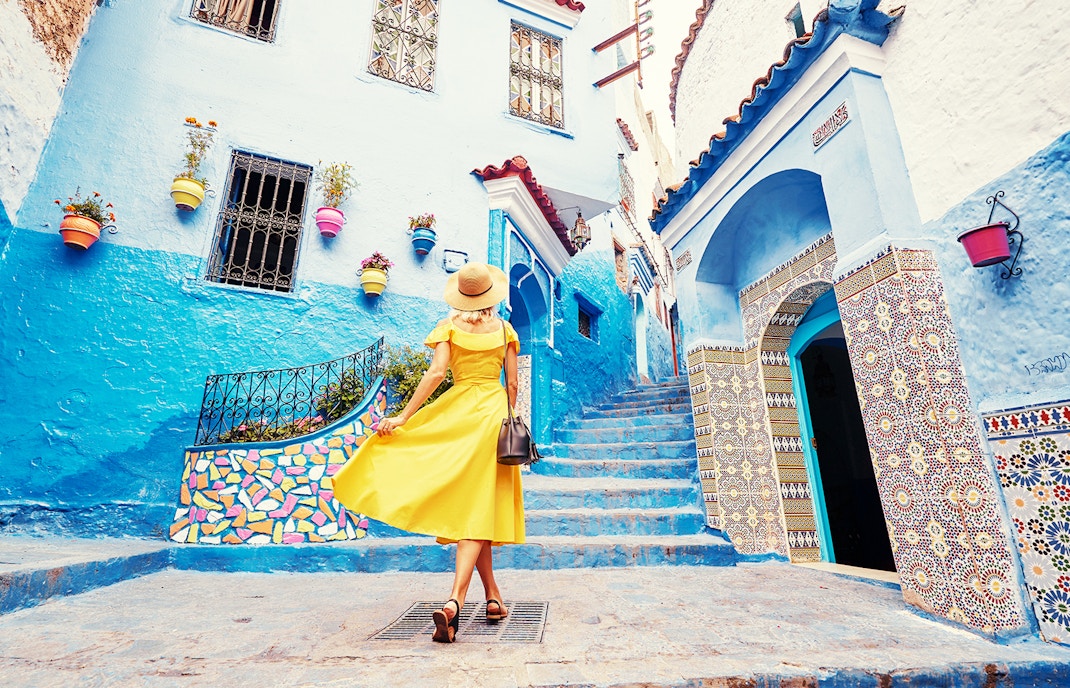
The medina is compact and walkable, a maze of narrow cobblestone lanes lined with artisan shops, flower pots, and cats dozing in doorways. The city contains 12 mosques and houses with round terracotta roof tiles, a style common in southern Europe but rare elsewhere in Morocco. The population is around 46,000, and the pace of daily life here is genuinely unhurried compared to Morocco's bigger cities.

Why is it worth visiting?

Chefchaouen isn't just a visual set piece. It works as a destination on its own terms. The medina is compact enough that you won't feel overwhelmed, but varied enough to fill two or three days comfortably. Unlike the crowded souks of Marrakech or Fez, Chefchaouen's market streets offer a more relaxed experience, and shopkeepers rarely pressure visitors. You can browse handwoven Berber rugs, leather goods, and locally produced goat cheese without running a gauntlet.

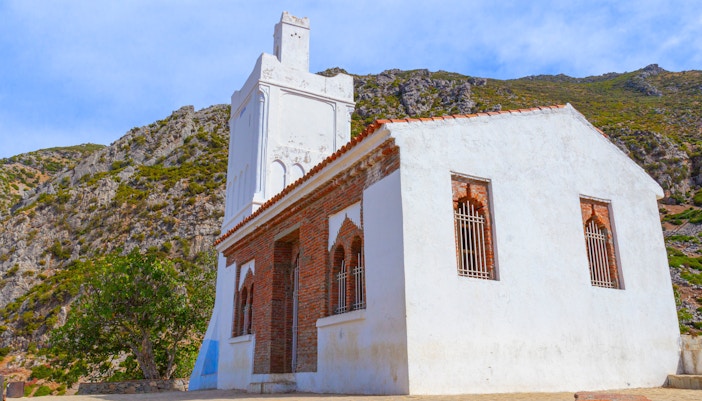
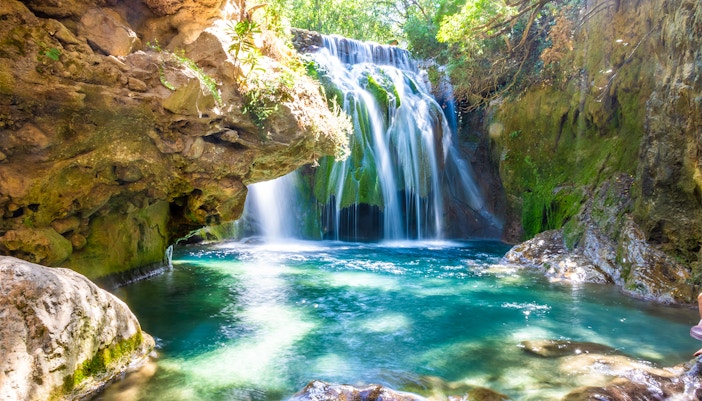
The surrounding Rif Mountains give you access to real hiking. A day trip to Akchour Waterfalls, located about 35 minutes away, takes you through lush forested trails to emerald pools and dramatic rock formations. The Spanish Mosque, perched on a hilltop, requires a 20–30 minute walk and rewards you with a panoramic view of the blue city against the mountains.

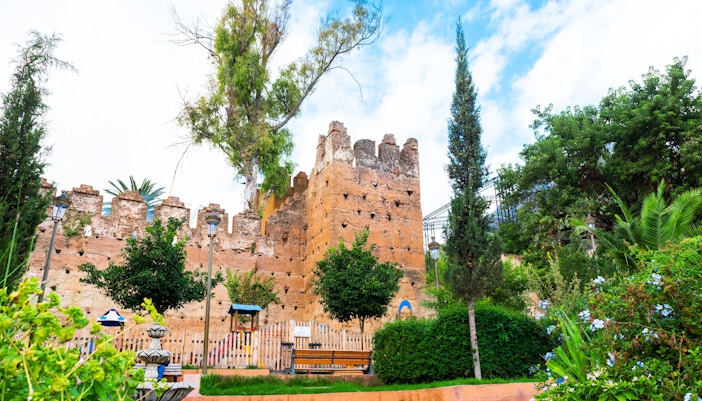
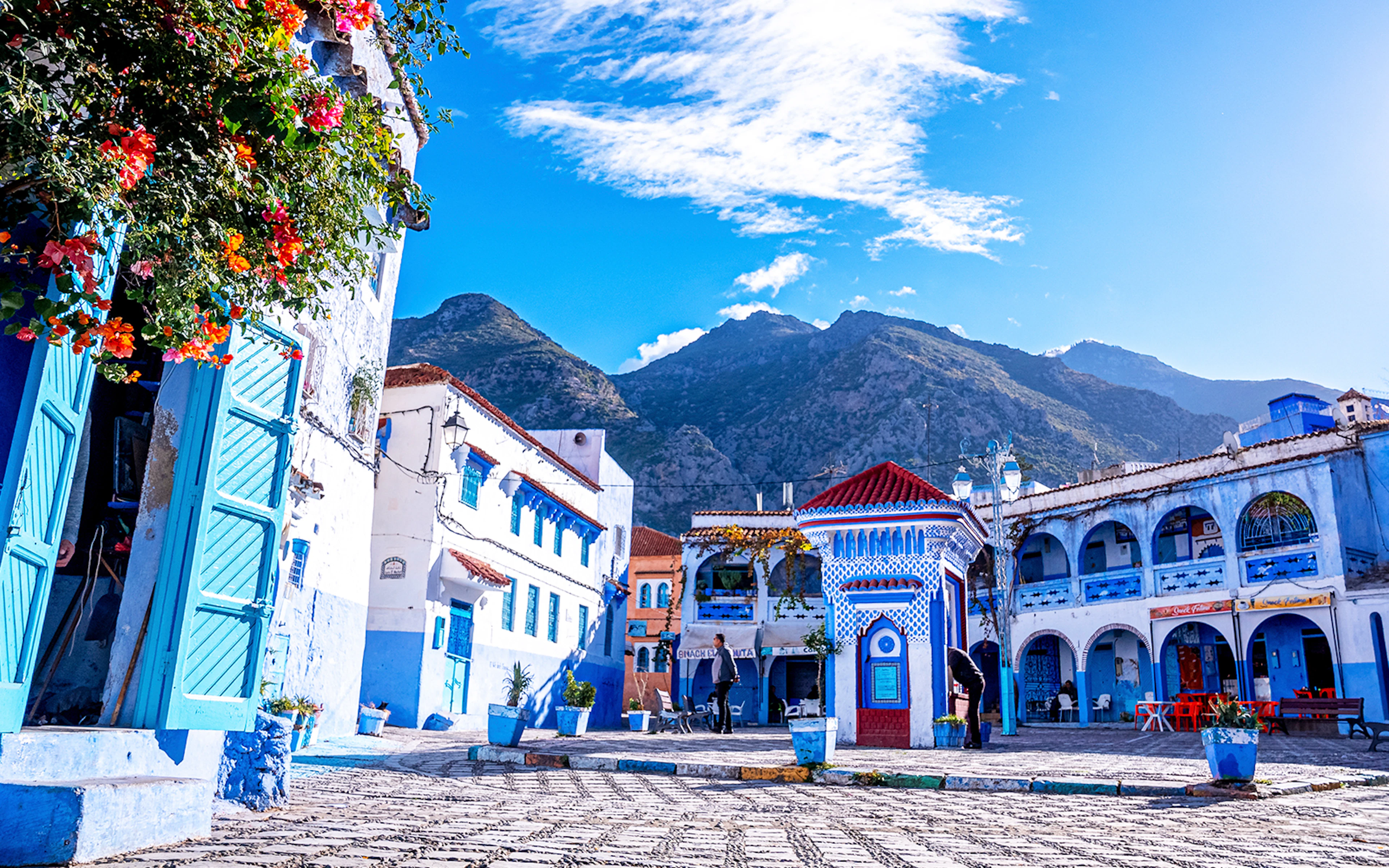
The food is worth the trip alone. Local specialties include goat cheese, bissara (split pea soup), chicken mountain tagine, and Moroccan mint tea brewed with wild herbs from the Rif Mountains. The main square, Plaza Uta El-Hammam, is framed by the red walls of the Kasbah and the octagonal minaret of the Grand Mosque.

Plan your visit to Chefchaouen

Best time to go to Chefchaouen

April and late October are the sweet spot, temperatures sit between 15°C and 25°C, the air is clear for photography, and crowds are manageable. Here's how each season breaks down:

  • Spring (March–May): The Rif Mountains are emerald green after winter rains, and the Akchour waterfalls hit their maximum flow from snowmelt. Atmospheric clarity is at its highest. The water at Akchour is still cold (below 10°C) in early spring.
  • Summer (June–August): Peak tourist season, with temperatures ranging from 18–29°C. This is the best time to swim at Akchour; water reaches 15–18°C and the pools are accessible. The medina gets crowded mid-morning to late afternoon, particularly with day-trippers from Tangier.
  • Autumn (September–October): Warm and sunny, good for hiking, and less crowded than summer. Akchour waterfalls have medium flow and the water is still warm enough for a swim.
  • Winter (November–February): Temperatures drop to 4–15°C at night, and snow is visible on the mountain peaks. Crowds thin considerably and prices drop. January and February are the quietest months.

Crowd tip: Between 10am and 4pm, the medina fills with day-trippers from Tangier regardless of season. Staying overnight and exploring early morning or evening gives you the streets to yourself.
Where is Chefchaouen?

Chefchaouen sits in the western part of the Rif Mountain range in northwestern Morocco, between the cities of Tétouan and Ouazzane. There is no nearby airport and no train service, which is partly why it feels removed from the typical Morocco itinerary.

Getting there by road:

  • From Tangier: Nearly 3 hours by road, with regular bus services. CTM buses run daily and are the most reliable option.
  • From Fez: A 4-hour journey, with morning bus departures that get you there by early afternoon.
  • From Casablanca: 5–6 hours by road. Many travelers break this up with an overnight in Rabat.
  • From Marrakech: Approximately 7 hours, best treated as a two-day journey or combined with a Fez stop.

The nearest airports are Ibn Battuta Airport in Tangier and Sania Ramel Airport in Tétouan. From either shared taxis or buses, connect to Chefchaouen.

Practical note: CTM buses book out days in advance, especially in high season. Buy your ticket online or at the station as soon as you arrive in Morocco.

What to do and see in Chefchaouen

Explore the Medina

Best for: Wandering, photography, and architecture lovers

Walk the entire medina in under 30 minutes. Find the Blue Street, aka Callejon El Asri. You can spot the Andalusian influence in the arched windows and small wooden doors.

Plaza Uta El-Hammam

Best for: People-watching, slow afternoons, café culture

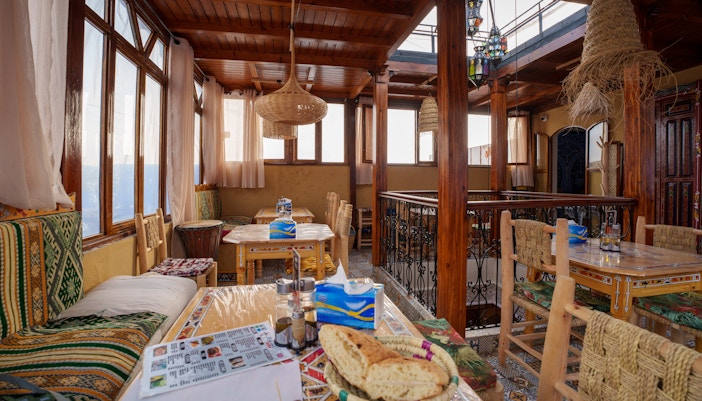
This is the main square of the city, surrounded by red Kasbaj walls and the octagonal minaret of the Grand Mosque. Here, you can grab a seat at a terrace café and order mint tea. Cafes are open between 9am and 11pm.

The Kasbah Museum

Best for: History, views, quick cultural stop

This 15th-century fortress lies in the center of the town. The museum entry costs 60 Moroccan Dirhams per adult and is worth the fee. You can see traditional clothing, ancient weapons, and musical instruments.

Ras El Maa Waterfall

Best for: Local life, short walks, relaxing breaks

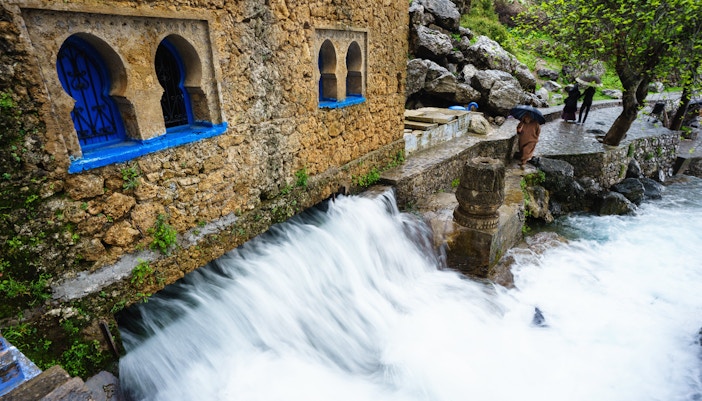
Ras El Maa is a short walk from the medina. Here, fresh mountain water flows into the city, and you can see local daily life unfold. Dip your feet in the water and savor fresh orange juice from the vendors.

Spanish Mosque (Bouzafer Mosque)

Best for: Sunset views, light hikes, photography

This structure was built in the 1920s during the Spanish rule, although it was never consecrated. The hike is roughly 20-30 minutes from the eastern gate. The trail is rocky, so wear comfortable hiking shoes.

Akchour Waterfalls & God’s Bridge

Best for: Nature, hiking, day trips

Akchour is about 35 minutes from Chefchaouen and trails through forests and rocky cliffs. You can visit a natural rock arch called God's Bridge, roughly a 45-minute hike from the dam.

History of Chefchaouen

🛡️ A fortress town with a strategic purpose: Chefchaouen was founded in 1471 by Ali ibn Rashid al-Alami as a small fortress to defend northern Morocco against Portuguese expansion. What began as a military outpost quickly became something more layered and enduring.

🏛️ A refuge shaped by exile and culture: After the fall of Granada in 1492, Muslim and Jewish refugees fleeing forced conversion arrived in waves. Another influx followed in 1609, when the last Moors were expelled from Spain.

🌿 A preserved identity through isolation: For much of its early history, the city remained closed to non-Muslims. That isolation helped preserve its distinct Andalusian-Ghomara blend, even as political control shifted across the region.

🏠 Spanish rule and visible architectural traces: In 1920, Spanish forces occupied the city during the Protectorate period. Their influence still shows up in subtle ways, most notably the round roof tiles commonly seen in southern Europe.

How Chefchaouen's blue alleys came to be

There’s no single confirmed origin story behind Chefchaouen’s blue walls. Instead, several theories coexist, each rooted in history, culture, or practicality.

One widely cited explanation traces the blue back to the Sephardic Jewish community that settled here after 1492. In Jewish tradition, blue symbolizes the sky and the presence of God. The idea is that painting walls blue extended this symbolism into daily life, turning the entire medina into a visual reminder of spirituality.

Some historians believe the practice became more widespread in the 1930s, when Jewish refugees fleeing Nazi persecution arrived in Morocco.

Local wisdom holds that the blue acts as a natural mosquito repellent, and that the cool-toned walls help keep homes comfortable during hot summer months.

Each year, residents of Chefchaouen refresh the paint, re-coating the terracotta-tiled houses in a fresh layer of blue. In recent decades, many locals maintain the tradition simply because it looks distinctive and draws visitors. What began as spiritual practice has become a living, self-renewing identity.

The Kasbah itself, the oldest structure in the city, is not blue at all, but terracotta red and ochre. The blue is a medina phenomenon, layered onto the city gradually over centuries, with no single moment of origin.

Tips for visiting Chefchaouen

  • Get there by overnight bus if you can: Arriving early morning means you walk into an empty medina before day-trippers arrive from Tangier. The streets are genuinely quiet before 9am.
  • Stay at least two nights: Two days cover the medina and main sights; a third day is ideal for a day trip to Akchour. One-day visitors miss the slower rhythm that makes the city worth visiting.
  • Dress modestly: Lightweight, loose-fitting clothing covering shoulders and knees is appropriate throughout the medina, and especially near mosques. A light scarf is useful for women.
  • Ask before photographing people: Berber women in the markets are often camera-shy, so always ask first. Most locals in the medina are accustomed to tourists but appreciate the courtesy.
  • Wear shoes with grip: The cobblestone streets are steep in places, and the trail to the Spanish Mosque is rocky. Flip-flops won't hold on wet stone after rain.
  • Book buses in advance: CTM buses fill up days ahead in high season. If you're arriving from Fez or Tangier, secure your seat as soon as your dates are confirmed.
  • The food to order: Goat tagine, bissara soup, and Berber omelets are local specialties not found in the same form anywhere else in Morocco. Mint tea in Chefchaouen is often brewed with wild herbs from the Rif Mountains; it tastes different from what you'll have in Marrakech.
  • Budget: Mid-range travelers typically spend $50–$70 per day, including accommodation, meals, and local transport. Riads inside the medina vary from budget guesthouses to boutique hotels with mountain views.
  • Safety: Chefchaouen is considered one of the safest destinations in Morocco for solo travelers, including women traveling alone. Standard precautions apply — keep bags close in the main square and avoid unlit areas after dark.

Frequently asked questions about Chefchaouen

It's pronounced "chef-show-en." Locals often shorten it to "Chaouen" (show-en).